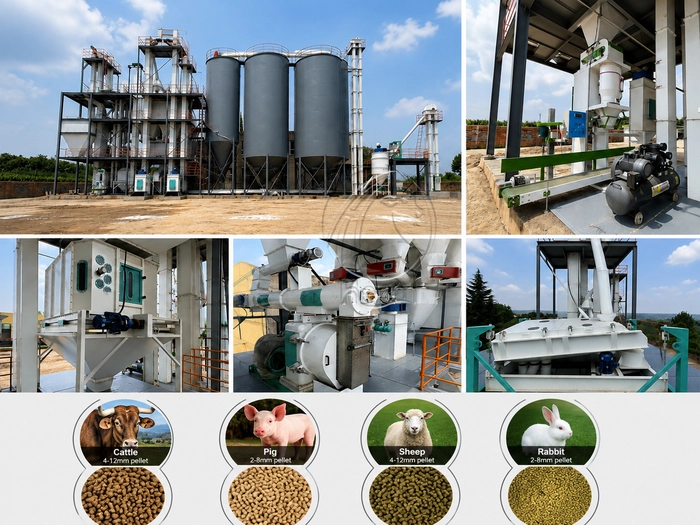
Modern Feed Mill Plant Solutions for Russia: Upgrading Efficiency, Consistency, and Digital Control
1. Overview of Russia’s Feed Industry Development
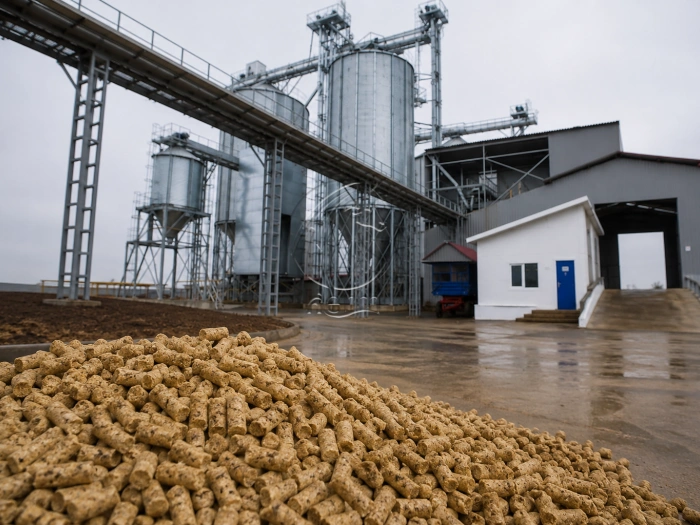
Russia’s feed industry is large and structurally important to its livestock and poultry production system. The country has strong agricultural resources and a growing demand for high-efficiency animal protein production. However, the development level of feed mill plants is uneven.
On one side, some integrated agribusiness groups operate highly automated feed production lines with advanced batching systems, laboratory testing, and digital process control. These modern plants are comparable to international standards.、
On the other side, many medium and small feed mills still rely on traditional production methods. These facilities often face limitations in:
• Energy efficiency of feed production line systems
• Pellet durability consistency from pellet machine systems
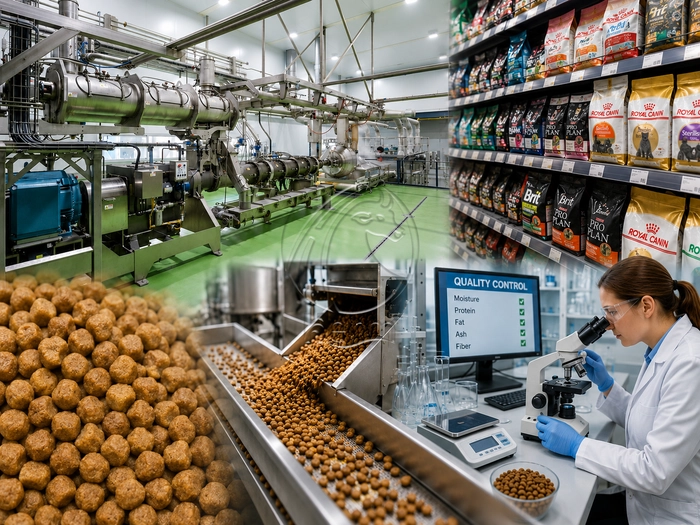
• Limited laboratory testing capability
• Weak digital traceability and production recording
This structural gap is creating a strong demand for feed mill plant upgrading solutions in Russia.
2. Key Drivers Behind Feed Mill Modernization in Russia
The modernization of feed production lines in Russia is not optional—it is driven by real industrial pressure.
2.1 Rising Demand from Livestock Industry
Poultry and swine production systems require:
• Stable feed quality
• High production volume
• Consistent nutrient formulation
Any fluctuation in feed quality directly impacts growth rate, feed conversion ratio (FCR), and farm profitability.
2.2 Raw Material Variability
Russian feed mills often deal with fluctuating raw material quality, including:
• Corn moisture variation
• Wheat bran protein inconsistency
• Soybean meal supply instability
This requires feed mills to adopt more flexible and precise feed formulation systems within the feed production line.
2.3 Increasing Feed Safety Requirements
Biosecurity and feed safety standards are becoming stricter. Feed mills are expected to ensure:
• Traceable ingredient batches
• Controlled contamination risk
• Standardized production processes
This makes automation and digital monitoring essential.
2.4 Import Substitution Pressure
As Russia develops local production of additives and feed ingredients, mills must adapt to:
• New raw material specifications
• Alternative protein sources
• Variable nutrient compositions
This increases the need for adaptable feed mill plant design.
3. Modern Feed Production Line Requirements
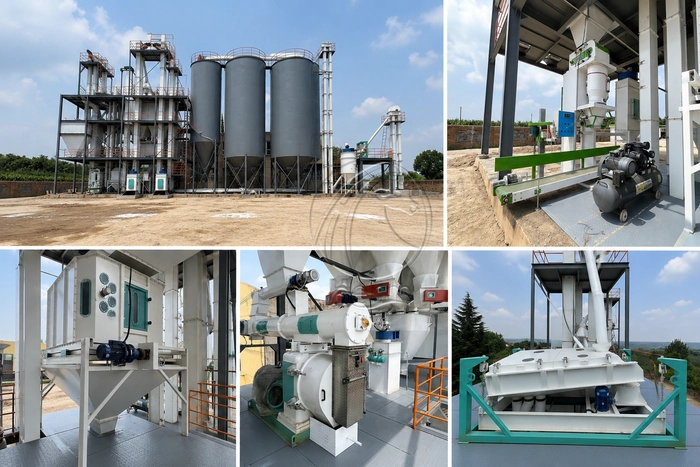
Modern feed manufacturing is no longer just mechanical processing. A complete feed production line system must integrate multiple precision-controlled stages.
A modern system typically includes:
• Raw material receiving and cleaning system
• Grinding system (hammer mill / crusher)
• Batch weighing and micro-dosing system
• High-efficiency feed mixer
• Conditioning system (steam adjustment)
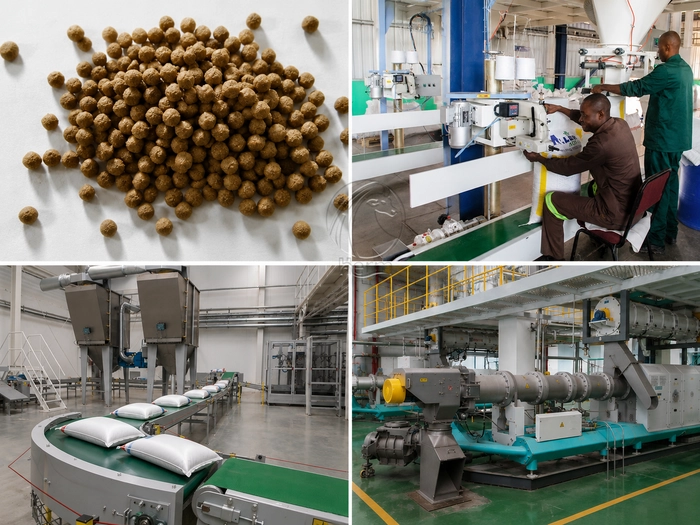
• Pellet machine (feed pellet mill)
• Cooling system (counter-flow cooler)
• Screening and grading system
• Packaging system
• Dust collection and automation control system
Each stage directly impacts final feed quality.
4. Importance of Process Control in Feed Mill Plants
If any stage in the feed production line is weak, the final feed quality will be affected.、
Key process control points include:
• Grinding particle size uniformity
• Mixing accuracy and coefficient of variation (CV)
• Moisture conditioning level before pelleting
• Pelletizing temperature and pressure stability
• Cooling efficiency and moisture reduction
• Final feed screening accuracy
Without proper control, feed may suffer from:
• Nutrient inconsistency
• Low pellet durability
• High fines ratio
• Reduced feed intake in animals
This is why modern feed mill plant upgrades focus heavily on process optimization rather than just capacity expansion.
5. Digitalization in Modern Feed Production
Digital control systems are becoming a core part of modern feed mill design.
A digitally controlled feed production line can record:
• Ingredient batch tracking
• Formula changes
• Production temperature and humidity
• Pellet machine operating parameters
• Finished feed quality data
Benefits of digital feed mill systems:
5.1 Faster Problem Diagnosis
When feed quality issues occur, data history allows rapid identification of production deviations.
5.2 Improved Traceability
Large livestock companies can audit feed production from raw materials to final output.
5.3 Better Production Stability
Automation reduces human error and ensures consistent operation.
5.4 Higher Profitability
Stable feed quality directly improves animal performance and reduces feed waste.
6. Pellet Quality: A Critical Performance Indicator
In Russia’s poultry and swine industry, pellet quality has a direct economic impact.
Key pellet quality indicators include:
• Pellet durability index (PDI)
• Fines percentage
• Digestibility efficiency
• Hardness and density
Poor pellet quality is often caused by:
• Inconsistent grinding size
• Insufficient conditioning
• Weak pellet machine performance
• Inefficient cooling system
Upgrading these sections of the feed production line often provides higher ROI than increasing production capacity alone.
7. Equipment Upgrade Opportunities in Russia
For many feed mills in Russia, full plant replacement is not necessary. Instead, modular upgrading solutions are more practical.
Typical upgrade areas include:
• High-efficiency pellet machine replacement
• Conditioning system optimization
• Automatic batching system installation
• Cooling system improvement
• Dust collection upgrade
• PLC automation integration
This modular approach reduces investment cost while improving performance significantly.
8. Equipment Supplier Requirements in the Russian Market
Russia is a demanding but highly valuable market for feed mill plant suppliers.
Customers typically prioritize:
• Long-term equipment durability
• Stable spare parts supply
• Energy efficiency under cold climate conditions
• Easy maintenance structure
• Local technical support capability
Therefore, suppliers must provide not only machines, but also complete engineering support and after-sales service systems.
9. Future Trends of Russia’s Feed Industry
The future development of Russia’s feed mill sector will be defined by operational discipline and automation integration.
Key trends include:
• Increased adoption of smart feed production lines
• Expansion of fully automated feed mill plants
• Higher demand for pellet quality consistency
• Integration of digital traceability systems
• Energy optimization under rising costs
Feed mills that can consistently produce high-quality feed from variable raw materials will gain a strong competitive advantage.
10. Conclusion: From Equipment to Complete Feed Solutions
Modern feed production is no longer about isolated machines such as mixers or pellet mills. It is about building a fully integrated, intelligent, and stable production system.
A modern feed mill plant solution must combine:
• Engineering design
• Process optimization
• Automation control
• Pellet quality management
• Digital production tracking
In the Russian market, this transformation is already underway. Companies that invest in modernization now will achieve stronger cost control, higher feed quality, and improved livestock performance.
Contact us today for a customized poultry feed solution.
Henan Herm Machinery Co., Ltd was established in 2010 and has been devoted to the research and development of Feed Mill Machinery ever since. With more than 10 years of experience, Herm® has become a leading manufacturer and supplier of animal feed machines and complete animal feed production lines, cattle feed plants, poultry feed plants, animal feed pellet production lines, etc. It always endeavored to improve the quality of products and aims to meet the new requirements of the international market.
If You Are Ready to start a Feed Pellet Plant Business, please get in touch with us for the feed mill machine. We Can Provide Professional Design and Comprehensive Guidance According to Your Needs. Get in touch with us now!
Welcome, Contact Us!
Henan Herm Machinery Co., Ltd
Email: info@hermmachinery.com
Phone/Whatsapp: 0086-18037508651