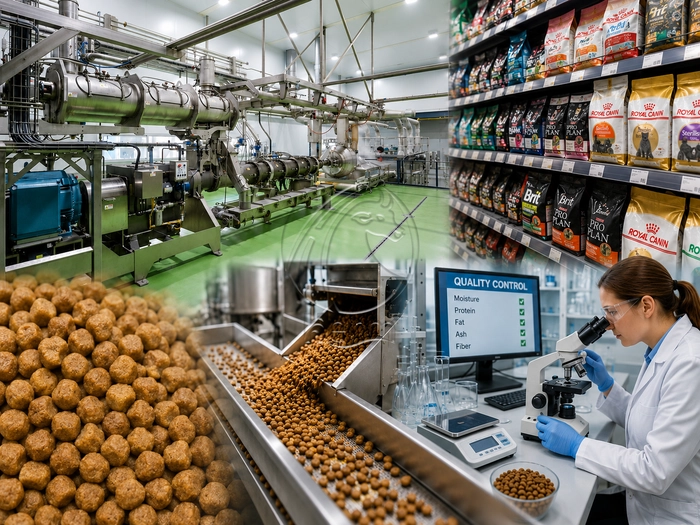
Feed Mill Plant Layout Design: Best Practices for Efficient Feed Production
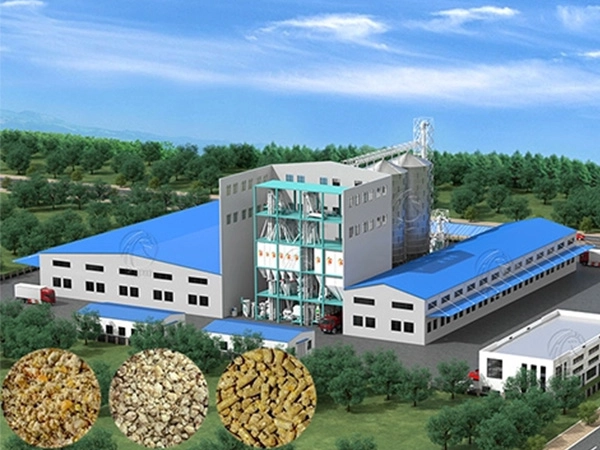
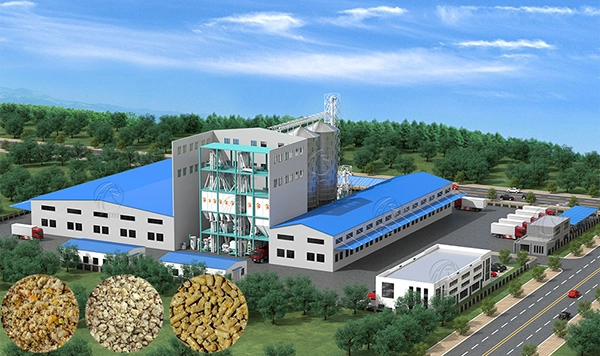
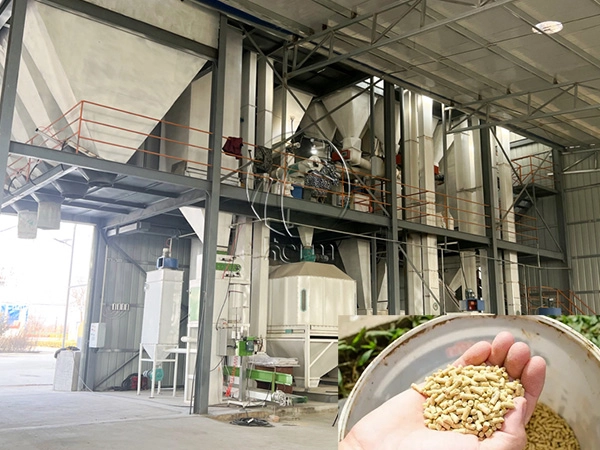
A well-designed feed mill layout is essential for efficient feed production. Proper plant design ensures smooth material flow, improves production efficiency, reduces energy consumption, and enhances overall operational safety.
When planning a feed mill project, investors must carefully consider equipment arrangement, raw material storage systems, production process flow, and future expansion possibilities.
A poorly designed feed factory layout can lead to production bottlenecks, higher operating costs, and inefficient use of equipment.
In this guide, we will explain the key principles of feed mill plant layout design and the best practices for building an efficient and modern feed production facility.
Why Feed Mill Layout Design Is Important
Feed mill layout design directly affects the efficiency and profitability of feed production.
An optimized plant layout offers several advantages:
• Smooth material flow between processing stages • Reduced transportation and handling costs • Improved production efficiency • Better safety and maintenance access • Lower operating costs
Therefore, professional plant design is a critical step in the development of a successful feed mill project.
Key Areas in a Feed Mill Plant Layout
A complete feed mill plant usually consists of several functional areas.
1. Raw Material Receiving Area
The raw material receiving system is responsible for receiving grains and other feed ingredients.
This area may include:
• Grain unloading stations • Conveying equipment • Raw material silos or storage bins
Efficient raw material handling helps maintain production continuity.
2. Raw Material Storage System
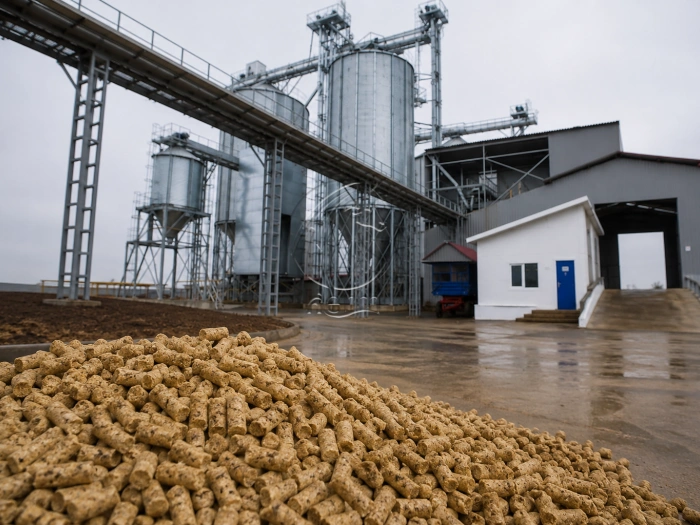
Feed mills often store large quantities of raw materials such as corn, wheat, soybean meal, and additives.
The mixing section is responsible for blending feed ingredients evenly.
This section usually includes:
• Batching systems • Feed mixers • Micro ingredient dosing systems
Accurate ingredient dosing and uniform mixing are essential for producing high-quality feed.
5. Pelletizing Section
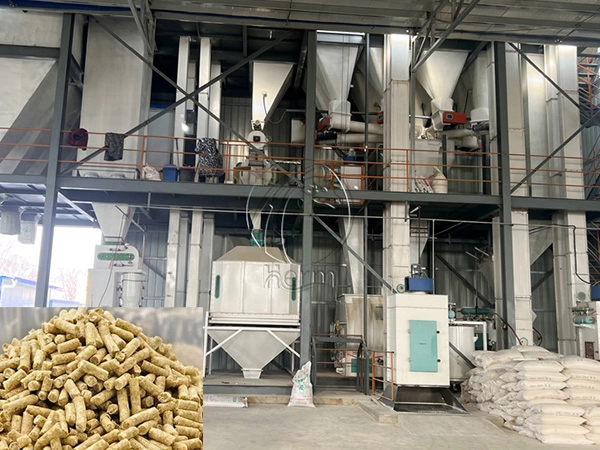
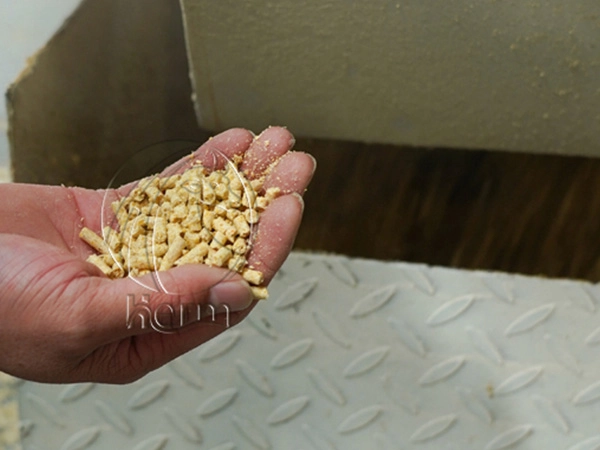
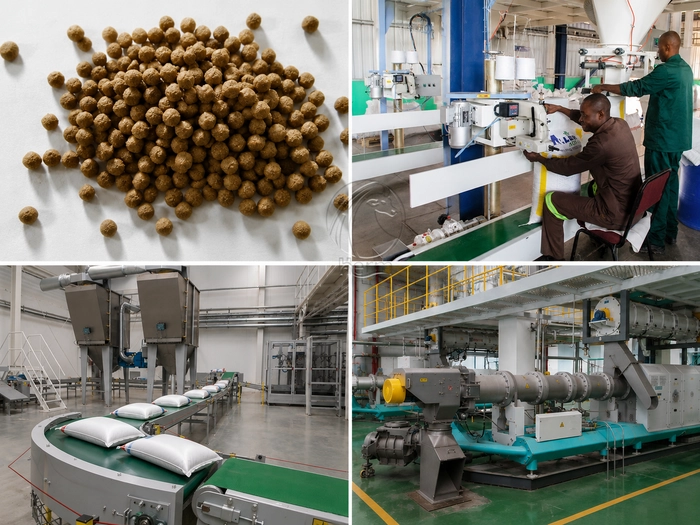
The pelletizing section includes feed pellet machines and related equipment such as conditioners.
This section is the core of the feed production process.
Proper layout ensures smooth material flow and efficient pellet production.
6. Cooling and Screening Section
After pelletizing, feed pellets must be cooled and screened.
Cooling equipment reduces pellet temperature and moisture, while screening equipment removes fines and broken pellets.
These processes improve pellet durability and final feed quality.
7. Packaging and Finished Product Storage
The packaging section includes automatic bagging machines and finished feed storage areas.
Finished feed products are packed into bags and stored in warehouses before transportation.
Efficient packaging systems help improve production efficiency and logistics management.
Feed Production Process Flow in Plant Design
A well-designed feed mill follows a logical production flow.
Typical process flow includes:
Raw material receiving → Grinding → Mixing → Pelletizing → Cooling → Screening → Packaging
Designing the plant layout according to this sequence helps minimize unnecessary material handling and improves overall efficiency.
Important Factors in Feed Mill Layout Design
Several important factors should be considered when designing a feed mill plant.
1. Production Capacity
The plant layout must match the planned production capacity.
Large feed mills require more equipment and larger storage systems.
2. Equipment Arrangement
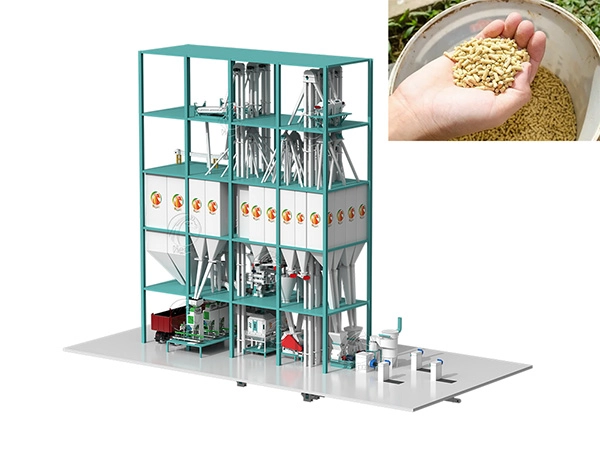
Equipment should be arranged to ensure smooth material flow and easy maintenance access.
Vertical layout designs are often used in feed mills to utilize gravity for material movement.
3. Future Expansion
A good plant design should allow space for future expansion.
As feed demand grows, the feed mill may need to increase production capacity.
4. Automation and Control Systems
Modern feed mills use automated control systems to manage material flow, batching, and pellet production.
Automation improves production accuracy and reduces labor requirements.
5. Safety Considerations
Feed mills must follow safety standards to prevent dust explosions, equipment accidents, and operational hazards.
Proper ventilation and dust collection systems are essential components of safe feed mill design.
Benefits of Professional Feed Mill Engineering
Professional feed mill engineering services provide several benefits for investors.
• Optimized production efficiency • Reduced construction and operating costs • Improved equipment performance • Better project planning and implementation • Reliable long-term operation
Working with experienced feed machinery engineers helps ensure the successful completion of feed mill projects.
Professional Feed Mill Plant Design Solutions
Henan Herm Machinery provides professional feed mill plant design and engineering services for feed manufacturers worldwide.
The company offers customized solutions based on production capacity, feed type, and customer requirements.
From plant layout design and equipment manufacturing to installation and commissioning, Henan Herm Machinery provides complete feed mill project support.
With years of experience in feed machinery engineering, the company has successfully delivered feed production line projects for customers in many countries.
Design Your Feed Mill Plant with Expert Engineering
• Feed mill plant layout design • Animal feed production lines (1–40 T/H) • Feed pellet machines and feed processing equipment • Installation, commissioning and operator training
Contact us today to receive a customized feed mill plant design for your project.
Henan Herm Machinery Co., Ltd was established in 2010 and has been devoted to the research and development of Feed Mill Machinery ever since. With more than 10 years of experience, Herm® has become a leading manufacturer and supplier of animal feed machines and complete animal feed production lines, cattle feed plants, poultry feed plants, animal feed pellet production lines, etc. It always endeavored to improve the quality of products and aims to meet the new requirements of the international market.
If You Are Ready to start a Feed Pellet Plant Business, please contact us for the feed mill machine. We Can Provide Professional Design and Comprehensive Guidance According to Your Needs. Get in touch with us now!