Russia’s Aquafeed Industry: A Strategic Growth Opportunity for Feed Manufacturers
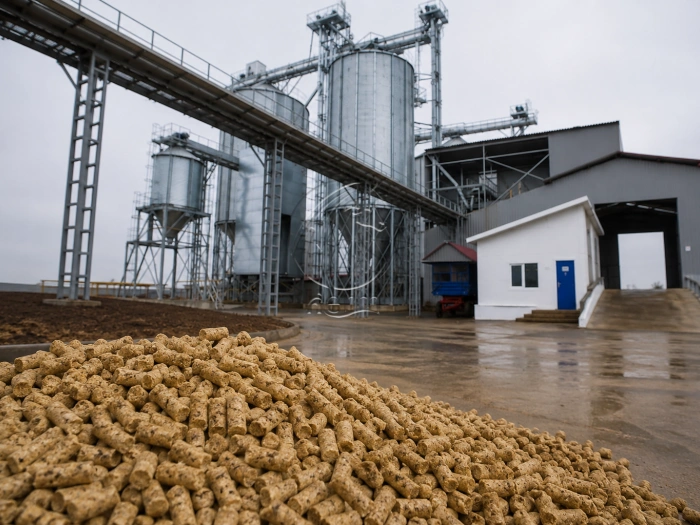
Compared with the country's poultry and swine feed sectors, Russia's aquafeed market remains relatively small. However, it has become one of the most strategically important segments of the Russian feed industry. Supported by abundant freshwater resources, expanding aquaculture production, and strong government policies promoting import substitution, Russia is accelerating the development of domestic fish feed manufacturing.
According to Feed Business Middle East & Africa, Russia aims to achieve 90% aquafeed self-sufficiency by 2030. To encourage domestic investment, the government has introduced financial support programs covering up to 25% of direct capital costs for new fish feed production facilities. These incentives are expected to stimulate investment in modern aquafeed plants, advanced extrusion technologies, and high-performance feed formulations.
Growing Aquaculture Requires High-Performance Feed
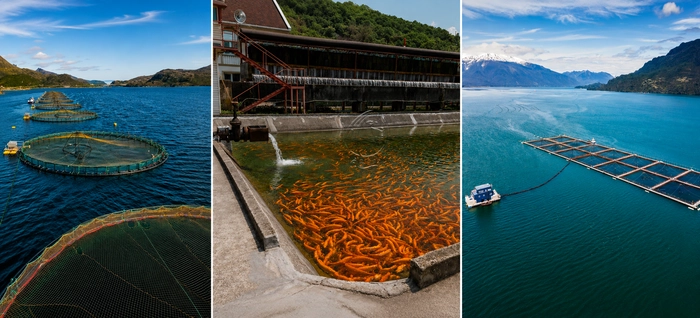
As Russia expands the farming of salmon, trout, carp, sturgeon, tilapia, and other commercially valuable aquatic species, demand for high-quality aquafeed continues to rise. Unlike conventional livestock feed, aquafeed must satisfy much stricter nutritional and physical requirements.
Modern fish feed must deliver:
• High protein digestibility
• Balanced amino acid profiles
• Precise lipid and energy levels
• automatic batching systems
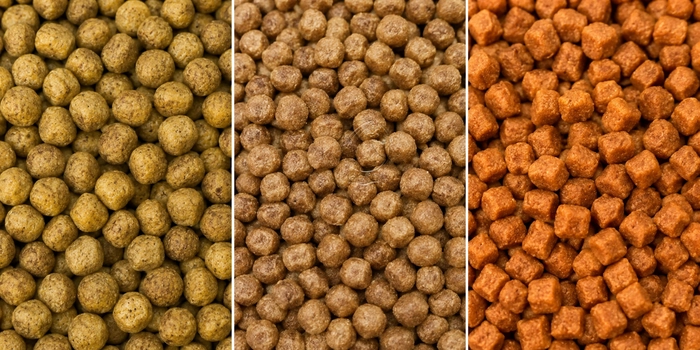
• Controlled floating or sinking characteristics
• High pellet durability
• Consistent pellet size and density
These performance characteristics directly influence fish growth rate, feed conversion ratio (FCR), survival rate, water quality, and overall farm profitability.
Import Substitution Creates New Manufacturing Opportunities
For many years, Russia relied heavily on imported premium aquafeed, particularly for salmonid species. However, rising transportation costs, currency fluctuations, trade restrictions, and supply chain uncertainties have significantly increased the cost of imported feed.
Domestic production offers an attractive alternative, but success depends on whether Russian manufacturers can consistently achieve international-quality standards. Fish farmers require reliable feed performance rather than simply lower prices. Therefore, local producers must invest in advanced production technology, strict quality control, and continuous formulation optimization.
Raw Materials Will Determine Future Competitiveness
Ingredient selection remains one of the biggest challenges facing Russia's aquafeed industry.
Traditional marine ingredients such as fish meal and fish oil continue to provide excellent nutritional value, particularly for carnivorous species like salmon and trout. However, global supplies remain limited, and prices are highly volatile.
To improve sustainability and reduce production costs, manufacturers are increasingly incorporating alternative protein and lipid sources, including:
• Poultry by-product meal
• Soy protein concentrate
• Wheat gluten
• Corn gluten meal
• Insect protein
• Algae oil
• Single-cell proteins
• Functional enzymes and feed additives
The objective is to reduce dependence on expensive marine ingredients while maintaining fish growth performance, feed efficiency, immunity, and product quality.
Advanced Aquafeed Production Lines Are Becoming Essential
Producing premium aquafeed requires far more sophisticated equipment than standard compound feed manufacturing.
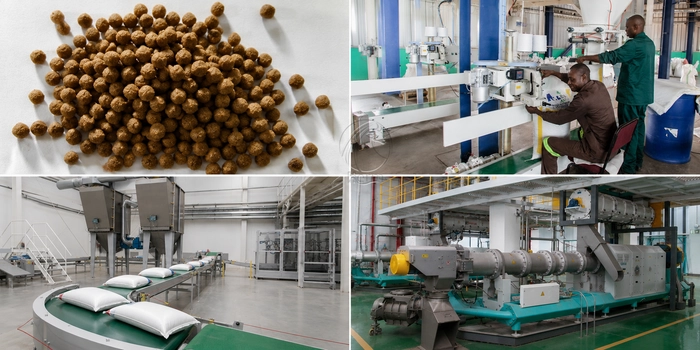
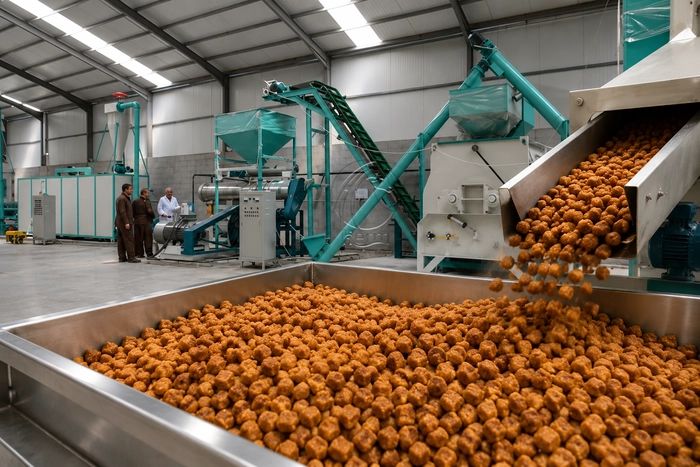
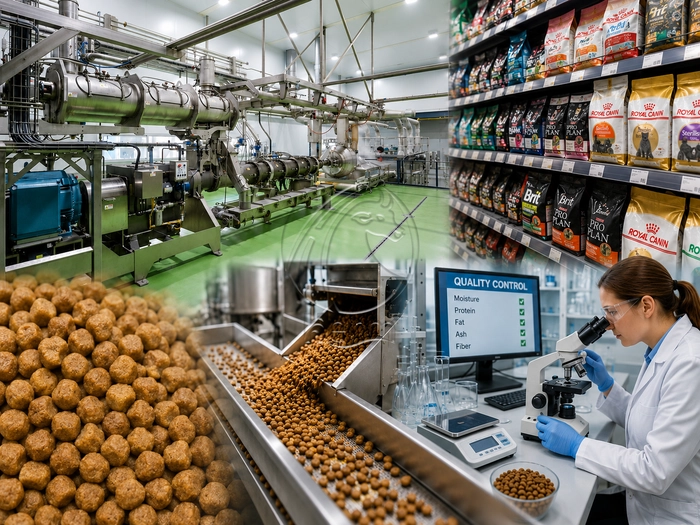
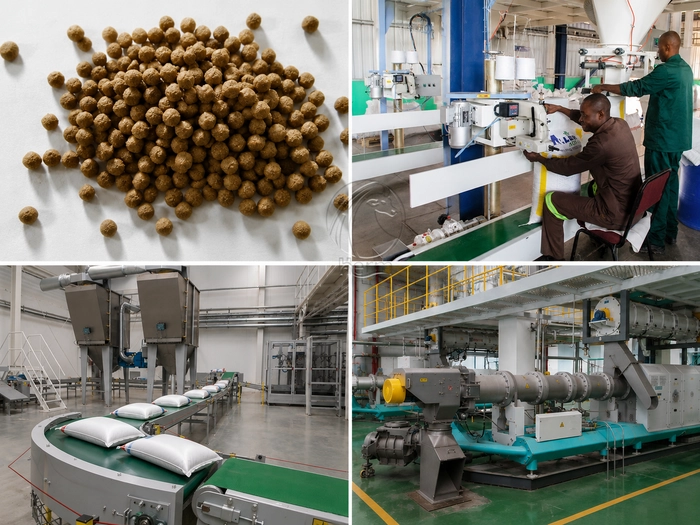
A complete aquafeed production line typically includes:
• Raw material grinding and batching
• Precision mixing systems
• Twin-screw extrusion technology
• Multi-layer drying systems
• Vacuum coating equipment
• Oil spraying systems
• Cooling equipment
• Automatic screening
• Metal detection
• Intelligent weighing and packaging systems
Modern extrusion technology enables manufacturers to precisely control pellet density, floating rate, sinking speed, expansion ratio, moisture content, and water stability, allowing feed to meet the specific nutritional requirements of different fish species.
In addition, intelligent automation, PLC control systems, and digital monitoring improve production efficiency, reduce energy consumption, and ensure consistent product quality.
Technical Service Is Becoming a Key Competitive Advantage
As aquafeed production becomes increasingly specialized, equipment suppliers are expected to provide more than machinery alone.
Manufacturers now seek turnkey solutions that include:
• Feed formulation support
• Plant layout design
• Process optimization
• Installation and commissioning
• Operator training
• Preventive maintenance
• Spare parts supply
• Long-term technical assistance
Comprehensive engineering services help reduce project risk while improving production efficiency and product consistency.
Outlook: A High-Value Market with Strong Long-Term Potential
Although Russia's aquafeed industry is still developing compared with its mature poultry and swine feed sectors, its long-term growth potential is substantial. Government support, expanding aquaculture production, and increasing demand for high-quality aquatic nutrition are creating favorable conditions for investment.
The companies most likely to succeed will be those capable of combining advanced extrusion technology, efficient feed formulations, reliable raw material sourcing, and intelligent manufacturing systems.
As Russia continues building a more self-sufficient aquaculture industry, modern aquafeed production will become a critical foundation for sustainable fish farming and long-term food security.
Contact us today for a customized poultry feed solution.
Henan Herm Machinery Co., Ltd was established in 2010 and has been devoted to the research and development of Feed Mill Machinery ever since. With more than 10 years of experience, Herm® has become a leading manufacturer and supplier of animal feed machines and complete animal feed production lines, cattle feed plants, poultry feed plants, animal feed pellet production lines, etc. It always endeavored to improve the quality of products and aims to meet the new requirements of the international market.
If You Are Ready to start a Feed Pellet Plant Business, please get in touch with us for the feed mill machine. We Can Provide Professional Design and Comprehensive Guidance According to Your Needs. Get in touch with us now!
Welcome, Contact Us!
Henan Herm Machinery Co., Ltd
Email: info@hermmachinery.com
Phone/Whatsapp: 0086-18037508651